
The heart of any rockabilly weekend festival beats to the rhythm of its performers. From the original 1950s pioneers who invented the sound to today’s touring three-piece rock bands who carry it forward, rockabilly music depends on artists who understand both its history and its raw energy. Here is an overview of the bands and performers who define the Canadian and international rockabilly festival circuit – and how their music connects to the dance floor, the vintage fashion scene and the broader retro lifestyle.

Rockabilly was born in the recording studios of Memphis, Tennessee, in the mid-1950s. Sam Phillips at Sun Records captured the explosive sound of artists who blended hillbilly country with African American rhythm and blues. Elvis Presley’s 1954 recording of “That’s All Right” is often cited as the first rockabilly record, but contemporaries like Carl Perkins (“Blue Suede Shoes”), Jerry Lee Lewis and Johnny Burnette were equally foundational.
These original 50s rockabilly bands established the template that modern performers still follow: a stripped-down lineup (typically guitar, upright bass and drums), a driving rhythm propelled by the slap bass technique, and vocals that veer between crooning and raw howling. The fashion of the era – greased pompadours, turned-up collars, pegged trousers and leather jackets – was inseparable from the music. Anyone who wants to play rockabilly music authentically must engage with this visual tradition as much as the sonic one.
The classic three-piece rockabilly band format – guitar, stand-up bass and drums – remains the most common setup on the festival circuit. This lean trio configuration forces musicians to be versatile, with each player covering both rhythm and melody. The upright bass is particularly iconic: slap bass technique produces the percussive punch that distinguishes rockabilly from other guitar-driven genres.
Canada has produced a steady stream of hot Canadian bands in the rockabilly and roots rock space. At Canadian weekenders, audiences regularly see acts like Three for a Buck, an Ottawa-based trio specializing in traditional country and rockabilly with an authentic 1950s honky-tonk sound. Other Ontario favourites include The Fuzz Vultures, who blend surf rock with rockabilly, and The Treble Tones, known for tight harmonies and vintage arrangements. In Toronto, Rockin’ Horse has maintained a presence on the local rockabilly scene, while old school bands from as far as Moncton have occasionally traveled to Ontario weekenders, demonstrating the genre’s reach across Canadian provinces.
CFRC Radio (cfrc.ca) in Kingston has been a consistent supporter of the Ontario rockabilly scene, including these bands in its regional concerts calendar alongside the annual festival listings.
Some of the most celebrated performers on the rockabilly circuit are known as much for inspiring dance floors as for their musical chops. The best jivers – bands whose tempo, groove and showmanship are specifically calibrated for jive and swing dancing – are in high demand at festivals worldwide.
Jive dancing is integral to the rockabilly weekend experience. Bands that excel in this space maintain a steady, danceable beat in the 140-180 BPM range, allowing experienced dancers to execute aerials, spins and lifts while keeping the energy accessible for beginners joining in after free Saturday lessons. The interplay between a skilled jiver band and an active dance floor creates a feedback loop of energy that is one of the most thrilling experiences in live music.
At events like the RHB Rockabilly Weekend in Brockville, the Saturday evening concert was legendary for its dance floor atmosphere. Couples in full 1950s attire filled the floor at St. John’s United Church, dancing to live sets that ran past midnight. Tickets to events could be bought through the festival’s website, and more details about performer schedules were available through local media and tourism boards.
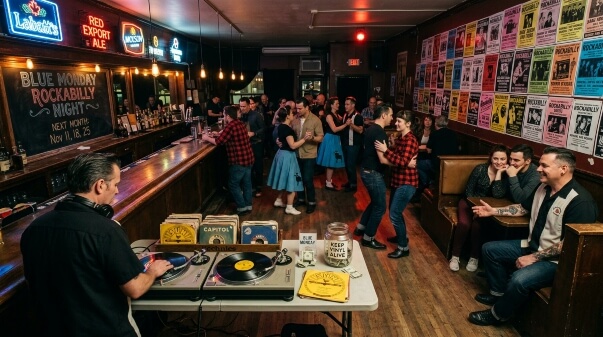
Not all rockabilly happens at weekend festivals. Across Canada and internationally, Blue Monday rockabilly nights and similar themed club events keep the community connected between major weekenders. These weekly or monthly gatherings – typically held at bars and clubs in cities like Toronto, Ottawa, Montreal and Hamilton – feature DJ sets spinning original 1950s vinyl, occasional live bands and social dancing. For newcomers, a Blue Monday night is an excellent low-pressure introduction to the scene before committing to a full festival weekend.
Rockabilly is one of the few musical genres where the performers’ visual presentation is as codified as the music itself. Lead singers with pompadours or ducktails, bass players in vintage work shirts, guitarists with Gretsch or vintage Fender instruments. Female performers channel the pin-up look with victory rolls, red lipstick and swing dresses. This visual commitment extends to the instruments: rockabilly purists favour hollow-body and semi-hollow electric guitars, vintage-style amplifiers and the upright bass.

Canadian rockabilly festivals have historically drawn performers from the United States, Europe and beyond. The RHB Rockabilly Weekend featured acts from across the continent, including Little Rachel (USA), described by organizers as “a true rockabilly powerhouse with acclaimed recordings and worldwide festival appearances.” Travel writers at Escapism (escapism.to) featured the event as a destination for live music fans seeking authentic rockabilly performances, with event tickets and full details available on the festival website.
Rockabilly’s roots in gospel and country music have naturally given rise to a Christian rockabilly subgenre. Artists perform original compositions and reinterpretations of hymns using signature rockabilly instrumentation – slap bass, twanging guitar and driving drums. Other crossover acts blend rockabilly with psychobilly, surf rock, country swing and blues, ensuring diverse programming across multi-day festivals.
The rockabilly rumble – a term used for high-energy festival showdowns between competing bands – has become a tradition at some weekenders, with audiences voting for their favourites in head-to-head sets. These rockabilly rumble events trace back to early weekender traditions and were a feature of several editions of the festival, including the 2019 program.
Artist / Band | Origin | Style | Known For | Fashion Signature |
|---|---|---|---|---|
Three for a Buck | Ottawa, ON | Traditional rockabilly | Authentic 1950s sound | Western shirts, pompadours |
The Fuzz Vultures | Ontario | Surf / rockabilly | High-energy shows | Tiki-inspired surf wear |
The Treble Tones | Ontario | Vocal harmony | Vintage arrangements | Matching stage outfits |
Jeanne Truax | Ontario | Rockabilly / country | Femme rock’n’roll | Pin-up style dresses |
Little Rachel | USA | Rockabilly powerhouse | International festivals | Bold retro glamour |
Rockin’ Horse | Toronto, ON | Roots / rockabilly | Toronto scene mainstay | Classic greaser look |
The rockabilly music scene in Canada continues to thrive through a network of dedicated performers, passionate fans and festivals. Whether you are a lifelong enthusiast of 50s rockabilly bands or a newcomer curious about the sound, the live festival experience – with its vintage fashion, jive dancing and unmistakable energy – remains the best way to discover this enduring musical tradition.