
Rockabilly music and classic car culture are inseparable. Since the genre’s earliest days in the 1950s, the sound of slap bass and twanging guitars has been the soundtrack to cruising in customized automobiles, gathering at drive-ins and showing off meticulously restored hot rods. At Canadian rockabilly weekend festivals, the car show is as much a draw as the live music and the dance floor – a rolling museum of mid-century design where chrome, paint and vintage lifestyle converge.
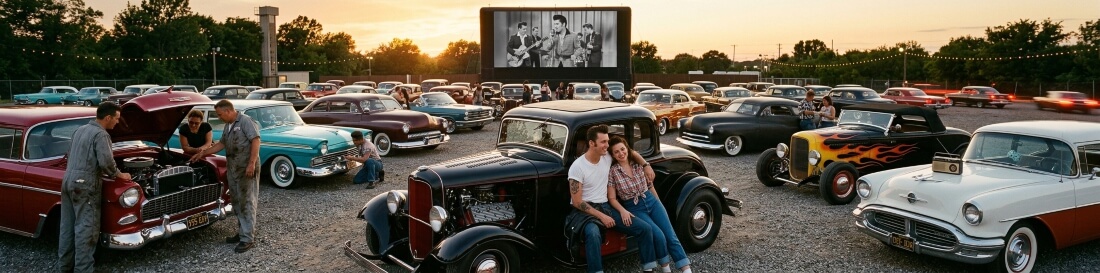
In the 1950s, the same young people who listened to Elvis Presley and Carl Perkins on the radio spent weekends under the hoods of 1932 Ford coupes and 1955 Chevrolet Bel Airs. Customizing a car was an expression of identity, just like choosing a pompadour over a crew cut or wearing a leather jacket instead of a sport coat. The hot rod, the hairstyle, the music and the attitude were all part of the same rebellious youth culture. Today, this relationship continues at rockabilly festivals worldwide, where car owners who restore vintage vehicles travel alongside the music fans and jive dancers.
The car show at the RHB Rockabilly Weekend in Brockville was a Saturday fixture for two decades. At St. Lawrence Park, classic automobiles from the 1940s through the 1960s lined the waterfront – from matching-numbers stock restorations to wild custom builds with flame paint jobs, lowered suspensions and chromed engines. Brockville Tourism (brockvilletourism.com) promoted the event as a highlight of the town’s summer calendar, and the Brockville car show became a destination in its own right for Ontario’s classic automobile community.
The 2019 edition of the Brockville car show was particularly memorable, drawing one of the largest collections of vintage vehicles in the festival’s history. Attendees browsed the cars while hot Canadian bands played rockabilly and surf music on the outdoor stage, dancers practiced their jive steps on the grass, and vendors sold vintage clothing and accessories at the adjacent market. Photographers from local media, including those working with Snapd Brockville, captured images that circulated widely and helped define the visual identity of the Canadian rockabilly car show scene.
Category | Description | Examples | Style Connection |
|---|---|---|---|
Hot Rods | Modified pre-1949 cars, built for speed | 1932 Ford coupe, 1934 Chevy | Rebellious – matches rockabilly energy |
Custom Cruisers | 1950s-60s cars with cosmetic mods | 1957 Bel Air, 1959 Cadillac | Glamorous – matches pin-up fashion |
Rat Rods | Intentionally rough, unfinished aesthetic | Primer-paint, exposed engines | Punk-influenced – matches psychobilly |
Stock Restorations | Factory-original specifications | Numbers-matching museum pieces | Purist – matches traditional rockabilly |
Kustoms | Chopped, lowered, radical bodywork | Lead sled Mercury, chopped coupes | Artistic – matches creative vintage style |
One of the most visually compelling aspects of a rockabilly car show is how it doubles as an informal fashion showcase. Car owners often coordinate their outfits with their vehicles – a 1950s pin-up dress photographed next to a matching-color Bel Air is a classic image. Many attendees use the car show hours for their most elaborate vintage ensembles: women in full swing dresses, victory rolls and cat-eye sunglasses; men in bowling shirts, pompadours and engineer boots. The intersection of fashion, automobiles and music is uniquely rockabilly.
Rockabilly car shows rarely happen in silence. Outdoor stages near the car display area feature live surf rock, rockabilly and roots music throughout daytime hours. At the RHB Saturday beach party, bands provided the soundtrack while attendees browsed cars and shopped the vintage market. This combination of vintage automobiles, live 1950s-style music and dressed-up crowds creates an atmosphere that feels like stepping into a time capsule.
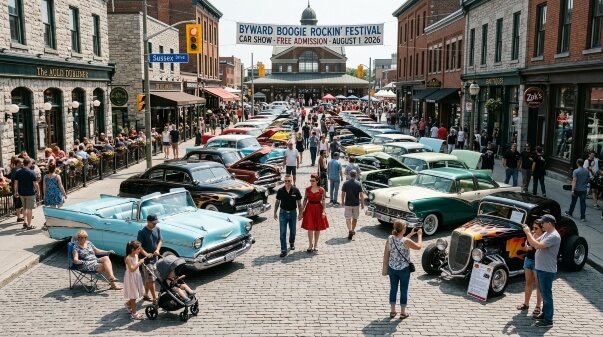
The ByWard Boogie Rockin’ Festival carries the car show tradition to Ottawa. The show is planned for Saturday, August 1, 2026, from 10:00 a.m. to 5:00 p.m. on York Street, between Sussex Drive and ByWard Square. The urban setting gives the car show a street-festival atmosphere, with vehicles displayed on closed roads amid heritage buildings, restaurants and boutiques. Free admission means anyone walking through the ByWard Market can enjoy the display.
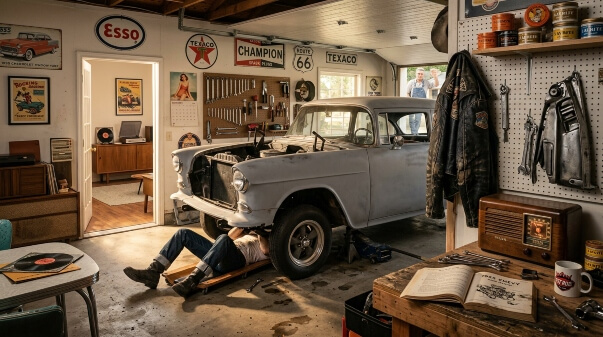
For many car enthusiasts in the rockabilly scene, their vehicle is the centerpiece of a broader vintage lifestyle. The same person restoring a 1955 Chevrolet might also furnish their home with mid-century furniture, play vinyl records on a vintage turntable and dress in 1950s fashion daily. Car shows at rockabilly festivals are gathering points for this community – spaces where people who live the vintage aesthetic year-round connect and share their passion.
Beyond the rockabilly weekend circuit, Ontario hosts numerous classic car events throughout the summer season. The 1000 Islands Parkway near Brockville is a favourite route for classic car cruises, and towns across eastern Ontario hold regular cruise nights and car meets. In the broader live music context, car shows are increasingly paired with live rockabilly and roots performances, from small-town events to organized festivals in Toronto, Hamilton and Kingston.
Whether at the ByWard Boogie in Ottawa, at a cruise night in the 1000 Islands or at a parking lot meet in Toronto, the connection between rockabilly culture, classic automobiles and the vintage lifestyle remains one of the genre’s most visually compelling and enduring traditions.